-
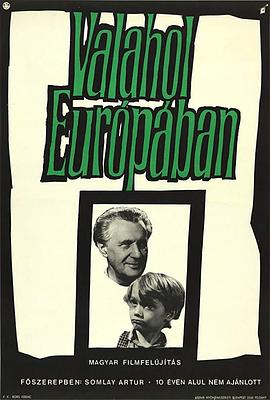
备注:已完结
类型:电影
主演:Artúr Somlay Miklós Gábor Zsuzsa Bá
语言:其它
年代:未知
简介:Somewhere in the remote region, the war ends. In the midst of ruined cities and houses in the streets, in rural hamlets, everywhere where people still live, are children who have lost their homes and parents. Abandoned, hungry, and in rags, defenseless and humiliated, they wander through the world. Hunger drives them. Little streams of orphans merge into a river which rushes forward and submerges everything in its path. The children do not know any feeling; they know only the world of their enemies. They fight, steal, struggle for a mouthful of food, and violence is merely a means to get it. A gang led by Cahoun finds a refuge in an abandoned castle and encounters an old composer who has voluntarily retired into solitude from a world of hatred, treason, and crime. How can they find a common ground, how can they become mutual friends The castle becomes their hiding place but possibly it will also be their first home which they may organize and must defend. But even for this, the price will be very high. To this simple story, the journalist, writer, poet, scriptwriter, movie director, and film theoretician Béla Balázs applied many years of experience. He and the director Géza Radványi created a work which opened a new postwar chapter in Hungarian film. Surprisingly, this film has not lost any of its impact over the years, especially on a profound philosophical level. That is to say, it is not merely a movie about war; it is not important in what location and in what period of time it takes place. It is a story outside of time about the joyless fate of children who pay dearly for the cruel war games of adults. At the time it was premiered, the movie was enthusiastically received by the critics. The main roles were taken by streetwise boys of a children's group who created their roles improvisationally in close contact with a few professional actors, and in the children's acting their own fresh experience of war's turmoil appears to be reflected. At the same time, their performance fits admirably into the mosaic of a very complex movie language. Balázs's influence revealed itself, above all, in the introductory sequences an air raid on an amusement park, seen in a montage of dramatic situations evoking the last spasms of war, where, undoubtedly, we discern the influence of classical Soviet cinematography. Shooting, the boy's escape, the locomotive's wheels, the shadows of soldiers with submachine guns, the sound of a whistle—the images are linked together in abrupt sequences in which varying shots and expressive sharp sounds are emphasized. A perfectly planned screenplay avoided all elements of sentimentality, time-worn stereotypes of wronged children, romanticism and cheap simplification. The authors succeeded in bridging the perilous dramatic abyss of the metamorphosis of a children's community. Their telling of the story (the scene of pillaging, the assault on the castle, etc) independently introduced some neorealist elements which, at that time, were being propagated in Italy by De Sica, Rossellini, and other film artists. The rebukes of contemporary critics, who called attention to formalism for its own sake have been forgotten. The masterly art of cameraman Barnabás Hegyi gives vitality to the poetic images. His angle shots of the children, his composition of scenes in the castle interior, are a living document of the times, and underline the atmosphere and the characters of the protagonists. The success of the picture was also enhanced by the musical art of composer Dénes Buday who, in tense situations, inserted the theme of the Marseilaise into the movie's structure, as a motive of community unification, as an expression of friendship and the possibility of understanding. Valahol Europaban is the first significant postwar Hungarian film. It originated in a relaxed atmosphere, replete with joy and euphoria, and it includes these elements in order to demonstrate the strength of humanism, tolerance, and friendship. It represents a general condemnation of war anywhere in the world, in any form.
-

备注:已完结
类型:电影
主演:朱安贾伊·伊鲁斯里 罗宁·提姆 Saisiri Xoomsai
导演:阿彼察邦·韦拉斯哈古
语言:其它
年代:未知
简介:導演和工作人員拿著 16mm 攝影機訪問泰國小市民, 請他們說說自己的過去~ 親身經歷說完, 還要再說另一個故事~ 此後, 導演拿著這個故事, 四出走訪泰國的鄉村, 邀請當地居民齊齊來玩接龍遊戲, 即興創作下一個段落~ 最後, 導演將這集體創作的故事在有限資源下拍成一部電影~ 這虛構的故事, 講述一位長期坐輪椅的男孩, 他一直只能靠女補習老師 Dogfahr 認識外面的世界~ 最近, 補習老師頸上無端長出一道疤痕, 後來突然在屋內暈倒, 無論如何也醒不過來~ 老師裙下更赫然滾出一個神秘圓球, 圓球又變成一位外星男孩… 故事越說越出奇, 劇情峰迴路轉, 被訪者逐一以不同表達方式讓這故事一直延續下去~
-

备注:已完结
类型:电影
主演:OmerPerelmanStriks 阿萨夫·乔纳斯 OfekNick
导演:AdamKalderon
语言:希伯来语 / 英语
年代:未知
简介:以色列游泳界冉冉升起的新星埃莱斯,背负着家人的期待,来到位于荒漠的泳训营,与来自各地的选手,角逐代表以色列出征奥运的唯一门票。在那里,他认识了俊俏又充满天分的奈福,两人亦敌亦友,既是竞争关系,又被他深深吸引,淋浴间的赤裸相对,更唤起他隐藏很久的潜在欲望。教练不断警告他:赛事前无友谊。繁忙的练习,加上天人交战的心意,决赛之日即将到来,埃莱斯决定跟随着自己感觉采取行动,他了解,赢得奖牌,或许不如赢得奈福的心。
-

备注:已完结
类型:电影
主演:帕特·希利 Pat Healy 泰勒·罗斯 Kelly O&a
导演:斯蒂芬·柯尼
语言:英语
年代:未知
简介: 17岁的生日派对,24小时的人性大观,在热辣辣的派对,泳池见证了成长。Henry 生日派对前一晚,好友Gabe来过夜,两人无所不谈,谈性说爱,Henry 会否对Gabe动心?生日派对的早上,Henry 的牧师爸爸开始煮早餐,妈妈开始预备,姐姐也回家参加派对。下午,包括爸爸的教会朋友、Henry 的同学和教友,还有一直暗恋亨利的卢根等更多来宾, 都齐集于泳池派对之中。入夜过后,这班青少年和各怀秘密的成年人,将要面对真正的自己。2011年香港同志影展参展作《孩子本色》导演再次探讨信仰和爱慾的关係,信者有冇得救?
-

备注:已完结
类型:电影
主演:拉妮·玛克赫吉 Vishal Jethwa Sunny Hinduja
导演:Gopi Puthran
语言:印地语
年代:未知
简介:Shivani Shivaji Roy is back and this time she's on the trail of a 21 year old merciless villain who targets women.