-
备注:已完结
类型:电影
主演:Artúr Somlay Miklós Gábor Zsuzsa Bá
语言:其它
年代:未知
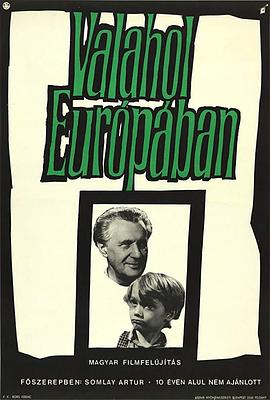
简介:Somewhere in the remote region, the war ends. In the midst of ruined cities and houses in the streets, in rural hamlets, everywhere where people still live, are children who have lost their homes and parents. Abandoned, hungry, and in rags, defenseless and humiliated, they wander through the world. Hunger drives them. Little streams of orphans merge into a river which rushes forward and submerges everything in its path. The children do not know any feeling; they know only the world of their enemies. They fight, steal, struggle for a mouthful of food, and violence is merely a means to get it. A gang led by Cahoun finds a refuge in an abandoned castle and encounters an old composer who has voluntarily retired into solitude from a world of hatred, treason, and crime. How can they find a common ground, how can they become mutual friends The castle becomes their hiding place but possibly it will also be their first home which they may organize and must defend. But even for this, the price will be very high. To this simple story, the journalist, writer, poet, scriptwriter, movie director, and film theoretician Béla Balázs applied many years of experience. He and the director Géza Radványi created a work which opened a new postwar chapter in Hungarian film. Surprisingly, this film has not lost any of its impact over the years, especially on a profound philosophical level. That is to say, it is not merely a movie about war; it is not important in what location and in what period of time it takes place. It is a story outside of time about the joyless fate of children who pay dearly for the cruel war games of adults. At the time it was premiered, the movie was enthusiastically received by the critics. The main roles were taken by streetwise boys of a children's group who created their roles improvisationally in close contact with a few professional actors, and in the children's acting their own fresh experience of war's turmoil appears to be reflected. At the same time, their performance fits admirably into the mosaic of a very complex movie language. Balázs's influence revealed itself, above all, in the introductory sequences an air raid on an amusement park, seen in a montage of dramatic situations evoking the last spasms of war, where, undoubtedly, we discern the influence of classical Soviet cinematography. Shooting, the boy's escape, the locomotive's wheels, the shadows of soldiers with submachine guns, the sound of a whistle—the images are linked together in abrupt sequences in which varying shots and expressive sharp sounds are emphasized. A perfectly planned screenplay avoided all elements of sentimentality, time-worn stereotypes of wronged children, romanticism and cheap simplification. The authors succeeded in bridging the perilous dramatic abyss of the metamorphosis of a children's community. Their telling of the story (the scene of pillaging, the assault on the castle, etc) independently introduced some neorealist elements which, at that time, were being propagated in Italy by De Sica, Rossellini, and other film artists. The rebukes of contemporary critics, who called attention to formalism for its own sake have been forgotten. The masterly art of cameraman Barnabás Hegyi gives vitality to the poetic images. His angle shots of the children, his composition of scenes in the castle interior, are a living document of the times, and underline the atmosphere and the characters of the protagonists. The success of the picture was also enhanced by the musical art of composer Dénes Buday who, in tense situations, inserted the theme of the Marseilaise into the movie's structure, as a motive of community unification, as an expression of friendship and the possibility of understanding. Valahol Europaban is the first significant postwar Hungarian film. It originated in a relaxed atmosphere, replete with joy and euphoria, and it includes these elements in order to demonstrate the strength of humanism, tolerance, and friendship. It represents a general condemnation of war anywhere in the world, in any form.
-

备注:已完结
类型:电影
主演:莱昂纳多·斯巴拉格利亚 爱德华多·诺列加 巴勃罗·埃查里 蕾蒂西亚·布
导演:马西路·品尼路
语言:西班牙语
年代:未知
简介:内勒(莱昂纳多·斯巴拉格利亚 Leonardo Sbaraglia 饰)和安吉尔(爱德华多·诺列加 Eduardo Noriega 饰)是一对被称为“双胞胎”的暴力匪徒,形影不离的他们实际上是同性恋人的关系。两人相识于一个同性恋出没的公共厕所,内勒把无家可归的安吉尔带回家,自此二人同居,一起生活,一起作案。安吉尔患有严重的幻听,时时听到聒噪的声音,受这些声音的支配,安吉尔开始拒绝内勒的触碰。隔阂渐渐在二人之间产生,内勒知道,只要他们再合作干一桩大案,就能重新找回“双胞胎”的感觉。他们参与了一桩由一名政府官员策划的抢劫案,两人以及同伙一起打劫了银行的运钞车。抢劫过程并不顺利,安吉尔中枪,内勒把警察都杀死了,他们犯下了惊天大案。为了逃避追捕,他们带着抢来的钱,展开了逃亡之旅。
-

备注:已完结
类型:电影
主演:Olga Kacijan Vladislava Milosavljev
导演:卡波·阿西莫维奇·戈迪纳
语言:其它
年代:未知
简介:This is a brilliant surrealistic film. But also a fully realistic story about a time when the brave avant-guarde artists were trying to explore the unknown landscapes of human possibilities. The contrast between two realities the poor village and the dadaist artists is shown very smart and brings the possibility of changing the world by the art. Unfortunately, that progressive ideals of making the world better by revealing new areas of imagination, that ruled in the first half of XX century, were crushed by the war. And, the tragedy finishes the artistic ideals are dead, international art brotherhood also, but, as a real disaster Yugoslavia is also dead, as a country, but as an artistic vision of nation's brotherhood, too. So, the art falls apart
-

备注:已完结
类型:电影
主演:August Lambrou-Negrepontis Dimitris
导演:瓦狄斯·马里纳基斯
语言:其它
年代:未知
简介:After Jason (9) is abandoned by his mother at a folk festival, he takes refuge in a forest cabin belonging to a mute loner. A series of circumstances eventually lead them to form a family - something both have lacked for a while.
-
备注:已完结
类型:电影
主演:Séverin-Mars Ivy Close Gabriel de G
导演:阿贝尔·冈斯
语言:法语
年代:未知
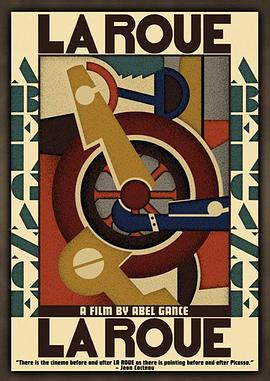
简介:这是史诗片巨匠冈斯的早期作品,原版长达九个小时。 影片讲述一个类似现在电视肥皂剧的故事:铁路工程师从一次车祸中救回一个女孩,把她当作女儿来领养。不料他自己和儿子都对女孩产生好感。为了不让儿子占有她,遂把女孩嫁给了一个富人。但儿子和养女之间有着压制不住的爱情。儿子跟她丈夫发生争执,不幸死亡。老人把儿子的死归咎于养女,不愿再见到她。后来他眼睛瞎了,养女偷偷回来照料他,直至为他送终。 影片的革命性表现在如下方面:开场的火车事故蒙太奇采用快速剪辑,极具震撼力;平庸的剧情中增加了大量文学典故,丰富了内涵;摄影和剪辑均具有一定的形式感,如镜头的节奏跟音乐相吻合,画面中的机器被用作现代化的象征等,开启了“纯电影”的先河。片名指命运的轮回、欲望的轮回,由车轮形象来暗示。
-

备注:已完结
类型:电影
主演:Carlos Padilla 蕾奥娜·维埃拉 Xuna Primus
导演:路易斯·曼多基
语言:其它
年代:未知
简介:20世纪80年代伊始,位于中美洲北部的小国萨尔瓦多爆发长达12年的内战。政府军和游击队连年激战,人民流离失所,国家破败不堪。11岁的男孩恰瓦(Carlos Padilla 饰)和母亲、姊妹生活在一起,他的父亲背井离乡,杳无音信。家中的生活困苦不堪,死亡也随时威胁着他们。本该在学堂求学的恰瓦,却被迫成为了一名端着冲锋枪的娃娃兵。从此,死神成为这群懵懂孩童最亲密最恐怖的同行者…… 本片荣获2005年墨西哥金像奖最佳化妆、最佳特效和最佳女配角(Ofelia Medina)三项大奖;2005年柏林国际电影节水晶熊奖、2005年圣地亚哥影评人协会最佳外语片奖;2005年西雅图国际电影节最佳影片奖。
-

备注:已完结
类型:电影
主演:马科斯·鲁伊斯 贝戈尼亚·瓦加斯 彻楚·萨尔加多 Xavier Mar
导演:丹尼尔·蒙宗
语言:其它
年代:未知
简介:Set in 1978, the film marks the fourth joint effort between Monzón and Jorge Guerricaechevarría, and tells the action-packed, adrenaline-fuelled story of 17-year-old Nacho Cañas, an introverted student who lives in Girona and who is something of a misfit. When he meets El Zarco and Tere, young delinquents from the city’s Chinatown district, he gets caught up in a love triangle that leads him to indulge in an unrelenting onslaught of thievery, burglary and hold-ups that will change his life forever. The film is the chronicle of the summer during which Nacho experienced his first love and came of age, constantly crossing the boundary between two worlds, and overstepping the line that exists between right and wrong, between justice and injustice.


