-

备注:已完结
类型:电影
主演:Winky Wiryawan Prisia Nasution Nova
语言:其它
年代:未知
简介:Waking up after giving birth, Mayang gets the news unlike what she expects from Reza, her husband their first baby has died. Both of them are experiencing tremendous depression. Mayang can not accept it. Everyone at the hospital is sure that she is hallucinating. She contacts the police to look for a bright spot in this strange case. Dr. Vera who helped her give birth, provides evidence the document of her baby's death with several photographs of the incident. Mayang who chooses not to give up begins to be considered crazy by some people in the hospital, including her own husband. Moreover, she feels to be followed by a spirit.
-

备注:已完结
类型:电影
主演:未知
导演:未知
语言:英语
年代:未知
简介:Winter's End is a contemporary thriller set on a rural, isolated farm. 21-year-old Amy Rose live on this farm with her two brothers Henry and Sean and we follow Amy's progress from abuse and oppression at the hands of her older brother Henry, to independence and freedom.
-

备注:已完结
类型:电影
导演:翁贝托·伦齐
语言:其它
年代:未知
简介:This early 70's giallo by Umberto Lenzi is certainly among the best in his filmography and also in the whole genre. Personally I think Lenzi's best films are the funny cartoon-turned-film Kriminal, the stylish giallo Seven Blood-Stained Orchids, the explosive Napoli violenta and this. In the eighties he did plenty of film trash in form of Eaten Alive, Hitcher in the Dark or Black Demons, all of which are ripping something off andor very dull and slow moving. Knife of Ice came when the giallo boom was at its hottest and the result is convincing. Technically the film is superb, containing great cinematography in the beginning when we learn about the main character's trauma towards trains. From this point on, Lenzi shows us his ability to benefit the widescreen and, for example, the bicycle ride near the forest is genuinely beautiful! This scene also shows Lenzi's ability to build suspense, very slowly but meaningfully. After all, there aren't so many murders in the whole film, only the suspense circulating around the murderer's identity. One suspect is a devil worshipper which brings new aspects to the mystery. Since the final scene takes place in a church, one can wonder if Lenzi wanted to comment on something, maybe the hypocritical morale of church and superstition. The main character (Carrol Baker) is mute which demands a lot from her face and eyes. The actress works very well, giving us a believable performance circulating around the emotions of fear and mental pain. The other actors are good, too. The finally, however, may not give too positive a sight about female sex since they all are expressed rather negatively in the film, one way or another. Still this is easily among the most noteworthy in the genre, not as bloody as the Argento films, for example, but equally suspenseful and visually also interesting.
-
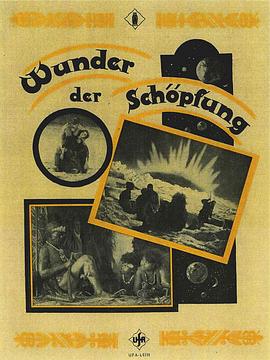
备注:已完结
类型:电影
主演:Margarete Schön Theodor Loos Paul B
语言:其它
年代:未知
简介:Wunder der Schöpfung is an extraordinary, fascinating Kulturfilm trying to explain the whole human knowledge of the 1920s about the world and the universe. 15 special effects experts and 9 cameramen were involved in the production of this film which combines documentary scenes, historical documents, fiction elements, animation scenes and educational impact. It its beautifully colored, using tinting and toning in a very elaborated way. Some visual ideas in the sequences with a space shuttle visiting different planets in the universe seem to have to be the inspiration for Stanley Kubrick's 2001 A Space Odyssey. In the context of Germany's Kulturfilm phenomenon, Wunder der Schöpfung was among the greatest achievements of the 1920s. The production was constructed, rehearsed, and shot over a period of two and a half years, under the supervision of Hanns Walter Kornblum. The idea to describe the universe and man's place in it well suited UFA's Grossfilm mentality, one year before the Metropolis catastrophe. Hundreds of skilled craftsmen participated in the project, building props and constructing scale models drawn by 15 special effects draughtsmen, while 9 cameramen in separate units worked on the historical, documentary, fiction, animation, and science-fiction sequences. Without star roles or even protagonists, the film's plot is crowded with meticulously structured and skillfully acted single scenes an artful mosaic of small vignettes. No less than four credited university professors ensured the factual background behind the scientific and historical events portrayed. The film's symbol of progress and the new scientific era is a spacecraft, travelling through the Milky Way, making all the planets and their inspiring worlds familiar to us, with the extravaganza of their distinctive features. The film's educational intentions, however, become steadily more obscure, humorous, or even campy as this popularization project proceeds. With the excuse of presenting the end of the world a not-so-new concept as a new, undeniably scientific truth, the film veers happily along a new path, displaying detailed apocalyptic scenes of the end of mankind. For today's audiences, this amazing film demonstrates how the universe was comprehended in the 1920s, and how that view was sold to contemporary audiences.


